
Your brand name is being used on Telegram. The profile looks official. The logo is yours. The channel name is almost identical to your company. And the people behind it are posting content, making offers, or communicating with your audience as if they represent your business. There is just one problem:
They don't.
Telegram's massive ecosystem makes it possible for impersonation networks to reach large audiences quickly. A single fake channel can create confusion. A coordinated group of channels can create something much more serious: a persistent brand abuse operation.
For businesses, creators, and established brands, simply reporting one channel may not be enough.
The stronger approach is to understand what rights are being violated, build the right evidence, connect related channels, and escalate the matter at the operation level when the pattern demands it.
This is where a trademark-led strategy can make a significant difference.
Table of Contents
- What Is Brand Impersonation on Telegram?
- Why Telegram Impersonation Is More Than a Fake Account
- When Does Trademark Infringement Come Into Play?
- Copyright vs. Trademark in Telegram Brand Abuse
- What Evidence Should You Collect
- Pellonia's Trademark-Led Takedown Strategy
- Why Reporting Channels Individually May Not Be Enough
- From Individual Channels to Operation-Level Escalation
- Common Mistakes Brands Make When Fighting Impersonation
- How Pellonia Helps Protect Brands on Telegram
- Frequently Asked Questions
- Final Thoughts
What Is Brand Impersonation on Telegram?
Telegram brand impersonation occurs when an individual, group, or network uses a company's identity in a way that creates the impression that it is officially affiliated with, authorized by, or operated by the legitimate brand.
The impersonation can take many forms.
A fake channel may:
- Use the company's exact name.
- Copy the brand's logo or visual identity.
- Use a confusingly similar username.
- Claim to be an official customer-support channel.
- Publish the company's copyrighted content.
- Promote products or services while pretending to represent the brand.
- Direct users to external websites or payment channels.
- Communicate with customers using the brand's identity.
Some impersonation attempts are obvious. Others are deliberately designed to look authentic. And that distinction matters. The more convincing the impersonation, the greater the potential for consumer confusion, reputational damage, and financial harm.
Why Telegram Impersonation Is More Than a Fake Account
A fake Telegram channel may initially look like a simple trademark problem. But consider what happens when the account starts interacting with customers. A user sees your logo and assumes the channel belongs to your company.
They follow instructions from the account. They provide personal information. They purchase something. They click an external link. Later, they discover that the account had nothing to do with your business.
At that point, the damage isn't limited to the fake channel. The customer may associate the experience with your legitimate brand.
This is why impersonation should be treated as a brand protection issue, not merely an account-reporting issue.
When Does Trademark Infringement Come Into Play?
Trademark rights can become particularly important when an impersonating Telegram channel uses protected brand identifiers in a way that creates confusion about the source, sponsorship, affiliation, or authorization of goods or services.
Relevant brand elements may include:
- Registered trademarks.
- Brand names.
- Logos.
- Service names.
- Distinctive marks associated with the business.
For example, imagine a company has a registered trademark for its brand name.
A Telegram channel adopts that name, uses the company's logo, and presents itself as an official channel. The issue is no longer simply that someone copied a logo. The broader question becomes: Is the channel using the brand's protected identity in a way that could confuse users about who operates or endorses it?
That is where a trademark-led enforcement strategy can become particularly valuable.
Copyright vs. Trademark in Telegram Brand Abuse
One of the most important steps in an enforcement strategy is identifying the correct intellectual property right.
Trademark and copyright are not interchangeable. Copyright generally protects original creative works while trademark protects identifiers that distinguish the source of goods or services
If an impersonating channel copies your promotional video or republishes your original images, copyright may provide an enforcement basis. If the central problem is that a Telegram channel is presenting itself as your official business, trademark rights may be particularly relevant.
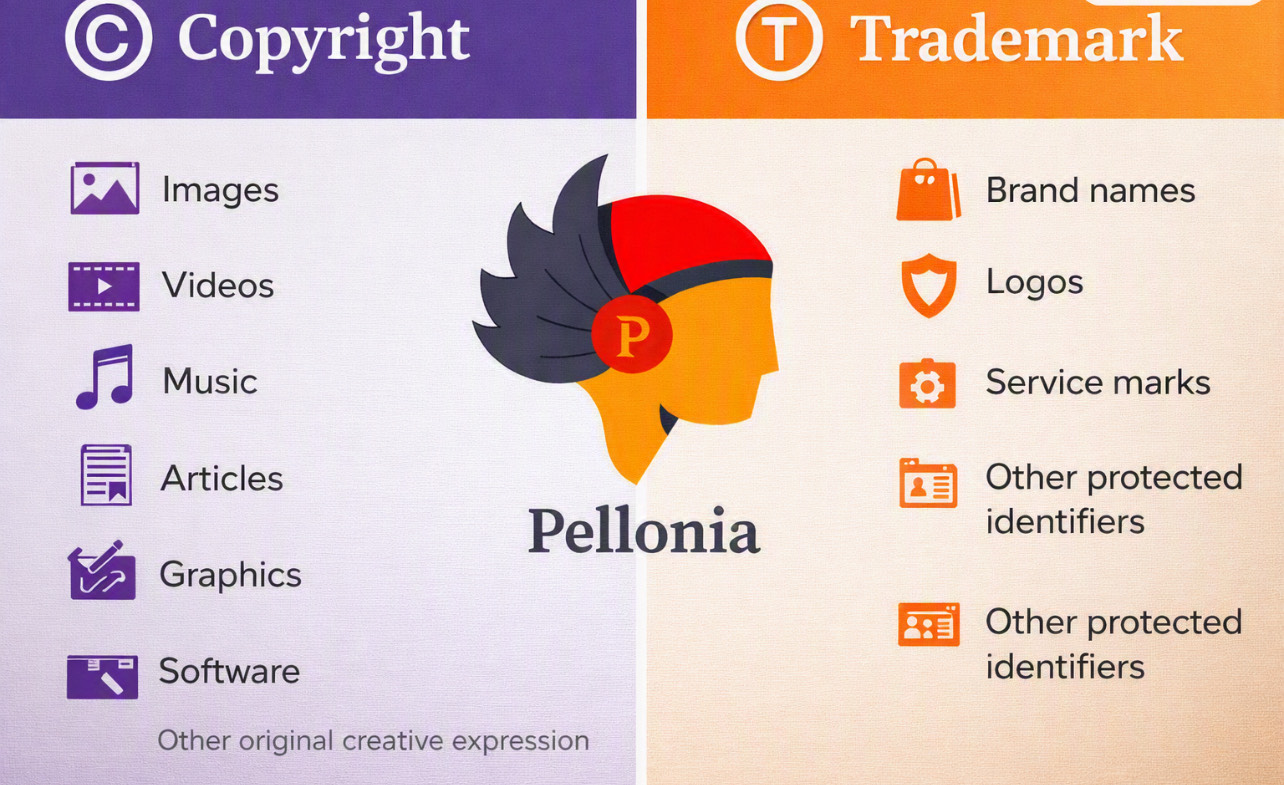
Copyright vs. trademark enforcement scope |
Why the distinction matters
An effective complaint should focus on the actual rights being violated rather than relying on a generic statement that "this account is fake." In some cases, multiple rights may be involved.
A single impersonating operation could simultaneously misuse a company's trademark, copyrighted content, domain name, and other protected assets. The enforcement strategy should reflect the complete picture.
What Evidence Should You Collect?
A strong enforcement strategy starts with strong evidence. Before requesting action, document the impersonating channel carefully.
Capture the Channel Identity
Record:
- Channel name.
- Username.
- Channel URL.
- Profile image.
- Description.
- Public contact information.
- Relevant linked accounts or websites.
Document the Impersonation
Take screenshots showing how the channel presents itself.
Look for language such as:
- "Official."
- "Official support."
- "Our customer service."
- "Authorized."
Statements suggesting a direct relationship with the legitimate company.
The objective is to demonstrate how the account could cause confusion.
Preserve the Content.
If the channel is using your copyrighted materials, preserve copies or screenshots of the relevant posts.
Document:
- Original content.
- Unauthorized copies.
- Publication dates where available.
- Relevant URLs or message links.
Identify Connections
This step can become particularly important when dealing with multiple channels.
Look for repeated:
- Administrators or contact details.
- External websites.
- Payment information.
- Promotional language.
- Visual assets.
- Username patterns.
- Linked channels.
- Posting behavior.
What appears to be five unrelated channels may actually be one coordinated operation.
Pellonia's Trademark-Led Takedown Strategy
At Pellonia, we approach Telegram brand impersonation as an intellectual property enforcement problem, not simply a reporting exercise.
Our strategy can be viewed in several stages.
Stage 1: Identify the Brand Abuse
We first determine what is actually happening.
Is the channel:
- Impersonating the brand?
- Misusing a trademark?
- Reproducing copyrighted content?
- Using the brand to sell unauthorized products?
- Redirecting users to another website?
- Part of a larger network?
This distinction helps determine the strongest enforcement approach.
Stage 2: Establish the Rights
Next, we identify the intellectual property rights relevant to the complaint.
Where applicable, trademark ownership can provide an important foundation for demonstrating that an impersonating channel has no authorization to represent the brand.
Supporting documentation may include trademark registration information and evidence establishing the relationship between the rights holder and the brand.
Stage 3: Build the Evidence Package
Instead of simply saying "this is a fake channel," the objective is to demonstrate why it is unauthorized and how it creates confusion or misuses protected intellectual property.
Evidence can include:
- Trademark information.
- Official brand information.
- Screenshots.
- Channel URLs.
- Examples of misleading representations.
- Copyrighted materials being used.
- Evidence connecting related channels.
Stage 4: Pursue Channel-Level Enforcement
The documented channels can then be reported through the appropriate platform enforcement process.
The goal is not merely to submit as many complaints as possible.
It is to submit clear, accurate, rights-based complaints supported by evidence.
Stage 5: Monitor What Happens Next
A takedown isn't necessarily the end. If another channel appears shortly afterward using the same brand identity, reporting the new channel as an isolated incident may only repeat the cycle.
This is where operation-level analysis becomes important.
Why Reporting Channels Individually May Not Be Enough
Imagine discovering ten Telegram channels impersonating your company.
You report all ten. A few disappear. Then five new channels appear. You report those. More appear.
The problem isn't necessarily the individual channels.
The problem may be the operation behind them.
When multiple accounts share characteristics, treating each one as a completely independent infringement can make enforcement reactive and inefficient.
The objective should shift from: "How do we remove this channel?" to: "How do we identify and address the network responsible for this activity?"
From Individual Channels to Operation-Level Escalation
Operation-level escalation means looking beyond individual URLs and identifying patterns connecting multiple infringing assets.
This can be particularly relevant when a network repeatedly:
- Creates new channels after takedowns.
- Uses variations of the same brand name.
- Reuses the same logos and visual assets.
- Links the same external websites.
- Promotes the same products or services.
- Uses similar contact information.
- Redirects users through the same infrastructure.
Connecting these indicators can transform a collection of individual complaints into a much stronger picture of coordinated abuse.
Why This Matters
A persistent infringer may view individual takedowns as temporary obstacles. If they can simply create another channel, the cycle continues.
Operation-level escalation aims to demonstrate the pattern, not just the latest violation. This can give the rights holder a more comprehensive basis for communicating the seriousness and scale of the abuse to the relevant platform or escalation channel.
Common Mistakes Brands Make When Fighting Impersonation
1. Focusing Only on the Channel Name
Impersonation isn't always obvious from the name alone. The profile image, description, posts, links, and communications may provide stronger evidence of the misleading relationship.
2. Using the Wrong IP Right
Calling every violation "copyright infringement" can weaken an otherwise valid complaint. If the central issue is unauthorized use of a protected brand identifier, trademark rights may be highly relevant.
3. Failing to Document Evidence
Channels can change names, delete posts, or disappear. Evidence should be preserved before enforcement begins whenever possible.
4. Treating Every Channel as an Isolated Incident
Several channels may be connected. Failing to identify those connections can result in a repetitive enforcement cycle.
5. Stopping After the First Takedown
A successful removal doesn't guarantee that the operation has stopped. Continued monitoring is essential when the threat is persistent.
How Pellonia Helps Protect Brands on Telegram
Telegram enforcement can become complicated when brand impersonation involves multiple channels, recurring infringers, and different types of intellectual property.
Pellonia helps brands approach these cases strategically.
Our work can include:
- Identifying potentially infringing Telegram channels.
- Monitoring unauthorized use of brand assets.
- Assessing trademark and copyright issues.
- Collecting and organizing evidence.
- Preparing rights-based takedown requests.
- Identifying relationships between related channels.
- Monitoring repeat infringements.
- Supporting escalation when individual takedowns do not resolve the underlying problem.
The objective isn't simply to remove one URL. It's to help protect the brand behind it.
Frequently Asked Questions (FAQs)
Q: What is Telegram brand impersonation?
Telegram brand impersonation occurs when an unauthorized person or organization uses a company's name, logo, identity, or other brand elements in a way that falsely suggests an official relationship, affiliation, or authorization.
Q: Can a trademark be used to take down an impersonating Telegram channel?
A trademark can provide an important basis for enforcement when a channel uses a protected mark in a way that creates confusion about the source, affiliation, sponsorship, or authorization of the account. The appropriate enforcement route depends on the facts of the case and the applicable rights.
Q: Is Telegram impersonation a copyright issue or a trademark issue?
It can be either, or both. Trademark may be particularly relevant when the core problem is unauthorized use of a brand name or logo to create an impression of official affiliation. Copyright may apply when the channel also copies protected images, videos, music, or other original works.
Q: What if multiple Telegram channels are impersonating my brand?
Multiple channels should not automatically be treated as unrelated incidents. If they share names, content, external websites, contact details, administrators, or other characteristics, documenting those connections can help establish a broader pattern of coordinated activity.
Q: Why isn't one Telegram takedown always enough?
Persistent operators can create new channels after an account is removed. If the underlying operation remains active, individual takedowns may only address symptoms of a larger problem. Monitoring and escalation can help address recurring abuse more strategically.
Q: Can Pellonia help with Telegram brand impersonation?
Yes. Pellonia helps rights holders identify unauthorized use of their brands and intellectual property on Telegram, build evidence-based enforcement cases, pursue channel-level takedowns, monitor repeat infringements, and identify patterns that may warrant broader escalation.
Final Thoughts
A fake Telegram channel may look like a single account problem.
Sometimes it is. But when the same brand is being misused across multiple channels, the real challenge may be much bigger.
That's why effective brand protection requires more than finding a URL and submitting a report. It requires understanding which intellectual property rights are being violated, documenting how the impersonation works, identifying connections between infringing assets, and knowing when to move from individual takedowns to broader escalation.
For brands facing persistent Telegram impersonation, the goal shouldn't simply be to play an endless game of whack-a-mole.
Find the pattern. Build the case. Protect the brand. That's the approach Pellonia brings to Telegram intellectual property enforcement.
If your brand is being impersonated on Telegram, Pellonia can help you identify the abuse, build an evidence-based enforcement strategy, and take action against both individual channels and broader patterns of infringement. Contact us now.


