
Have you created something original, a piece of music, software, a book, or a brand's visual assets, and want to protect it? While copyright protection in Canada is automatic, relying solely on this automatic right is a common and costly misconception. In today's digital landscape, automatic protection is often insufficient. For creators sharing work on platforms like Telegram, YouTube, or Etsy, a critical first step to enforce your rights and issue a DMCA takedown notice is providing proof of formal copyright registration (See here & here). These platforms typically require you to present a registration certificate to action claims against infringement. Without it, your ability to remove stolen content is severely limited.
This guide will explain why formal registration with the Canadian Intellectual Property Office (CIPO) is a non-negotiable step for serious creators and businesses, and how you can secure your copyright swiftly to protect your work and revenue.
Table of Contents
- Understanding Copyright in Canada
- Why Register Your Copyright?
- What Can Be Registered in Canada?
- The Standard CIPO Registration Process
- Register Your Copyright in Hours, Not Days with Pellonia
- Copyright Duration and Key Considerations
- Frequently Asked Questions (FAQ)
Understanding Copyright in Canada
In Canada, your original creative work is protected by copyright automatically the moment it is "fixed" in a tangible form, whether that's a saved document, a recorded song, a photographed image, or written software code. This automatic protection, rooted in the Canadian Copyright Act, grants you exclusive rights to reproduce, distribute, adapt, and publicly present your work.
However, while protection is automatic, enforcing that protection without formal registration can be an uphill battle. This is where the Canadian Intellectual Property Office (CIPO) comes in. Registering your copyright with CIPO transforms your automatic right into a powerful, enforceable asset.
Why Register Your Copyright?
Registration isn't mandatory, but it is a critical strategic move for any serious creator or business. Here's why:
Public Proof of Ownership: A CIPO registration certificate is a public, verifiable record that you are the copyright owner. This is invaluable in disputes or sales.
Stronger Legal Standing in Court: In infringement lawsuits, a registered copyright serves as prima facie evidence. This means the court initially accepts your certificate as proof, shifting the burden of proof onto the alleged infringer.
Eligibility for Statutory Damages: With registration, you can claim statutory damages (pre-set amounts per infringement) without the difficult task of proving your actual financial losses.
Enhanced Enforcement: A registration simplifies the process of demanding infringers to cease and desist and strengthens your position in negotiations.
Supports International Protection: As a member of international treaties like the Berne Convention, a Canadian registration can be a foundational step in protecting your work globally.
What Can Be Registered in Canada?
Your work must be original and fixed to qualify. Eligible categories include:
Literary Works: Books, articles, blogs, software code.
Artistic Works: Paintings, photographs, drawings, sculptures, maps.
Musical Works: Compositions, sound recordings.
Dramatic Works: Plays, screenplays, scripts.
The Standard CIPO Registration Process
The DIY route through CIPO involves preparing application details (title, author, owner, creation date), completing an online form, and paying the government fee. While CIPO's online system is straightforward, processing can take 3-5 business days or longer, depending on their workload. Any error or omission in the application can cause further delays or issues down the line.
Register Your Copyright in Hours, Not Days with Pellonia
Why wait days when you can secure your legal proof of ownership today? At Pellonia, we specialize in fast, accurate, and hassle-free copyright registration. Whether it's a chart-topping album from the UK or a unique musical work from Canada, we secure your Canadian copyright swiftly.
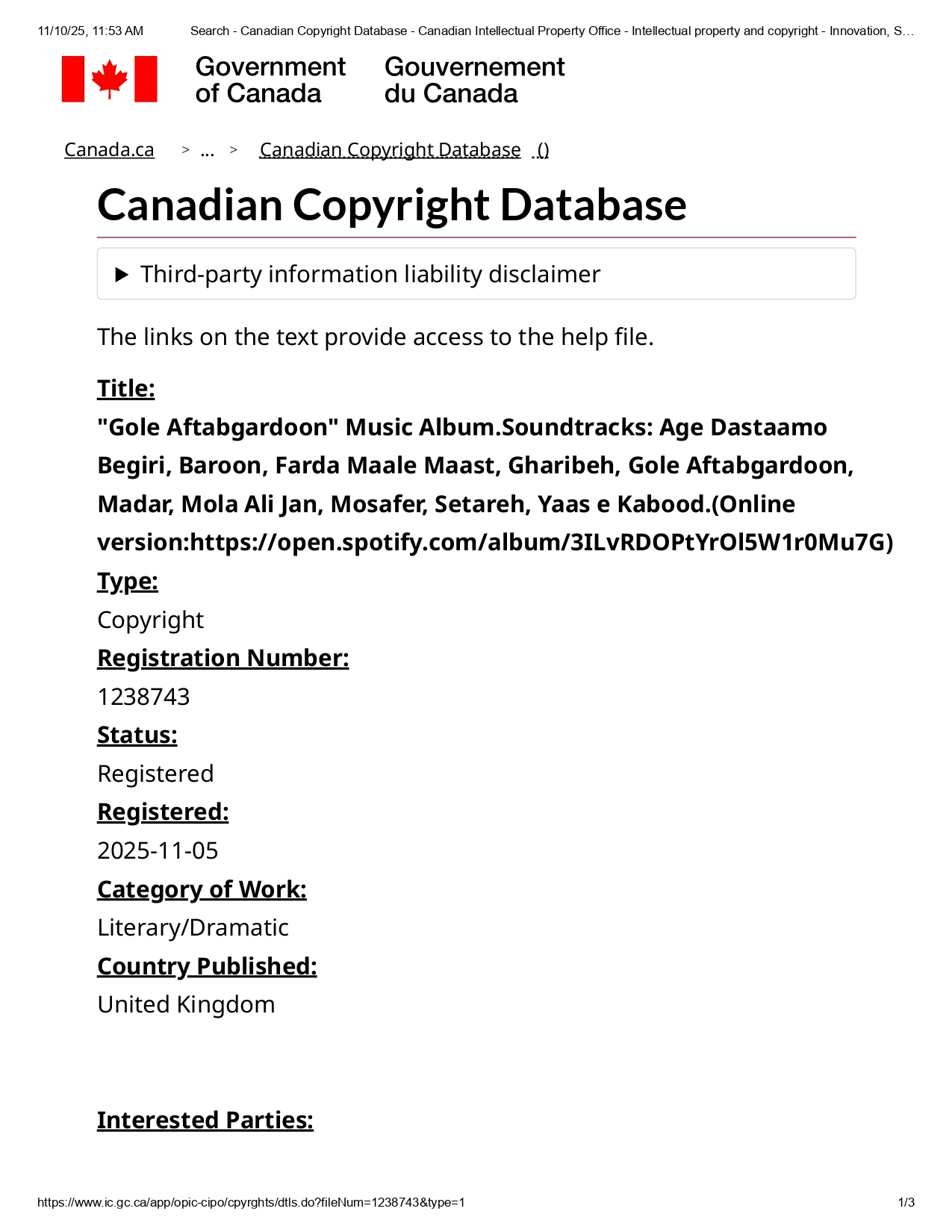
We streamline the entire process for you:
- You provide us with the details of your work and ownership.
- Our team expertly prepares and reviews your application to ensure absolute accuracy and compliance with CIPO requirements.
- We submit your application promptly and monitor its status.
- We get your official certificate of registration from CIPO to you as fast as possible.
Just like we did for a music album from Iran, securing their Canadian registration in under 48 hours.
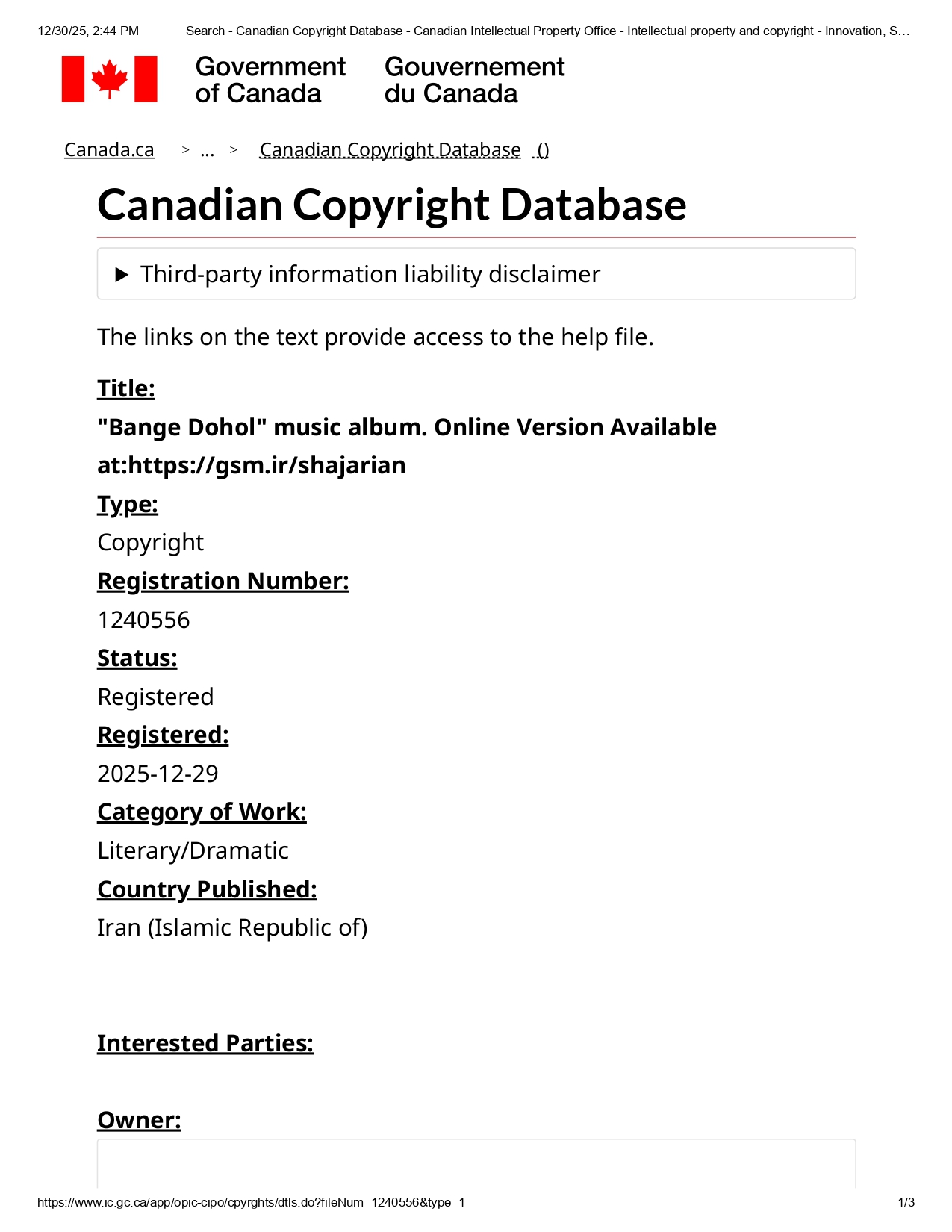
Our goal is to get your application submitted and processed in a matter of hours, not days. We handle the complexities so you can focus on creating, with the peace of mind that your intellectual property is secured.
Don't leave your creative assets to chance. Let Pellonia handle your copyright registration swiftly and professionally.
Copyright Duration and Key Considerations
In Canada, copyright generally lasts for the life of the author plus 70 years, after which the work enters the public domain. Important notes:
The 70-year term is recent (from 2022); works that entered the public domain under the old "life+50" rule before December 2022 remain public.
Registration does not expire during the protection term.
For businesses, ensure agreements clearly state that work created by employees or contractors is owned by the company.
Frequently Asked Questions (FAQ)
Q: Is copyright registration mandatory in Canada?
A: No, protection is automatic upon creation. However, registration with CIPO is essential for robust legal enforcement, proof of ownership, and claiming statutory damages.
Q: How long does the copyright registration process take?
A: Through CIPO directly, it typically takes 3-5 business days. With Pellonia's expedited service, we significantly accelerate the preparation and submission process, aiming to get your application filed in just a few hours.
Q: Can my Canadian copyright protect me in other countries?
A: Yes, through international treaties like the Berne Convention. A Canadian registration is a strong foundation for asserting your rights in other member countries.
Q: What's the difference between the copyright symbol and registration?
A: The © symbol provides notice of your claim but offers no legal proof. Registration with CIPO provides a government-issued certificate that serves as powerful evidence in court.
Copyright registration is the simplest and most powerful step you can take to defend your creative work and business assets. It turns an abstract right into a concrete, enforceable legal tool.
Don't navigate the process alone or risk unnecessary delays. Pellonia is here to make copyright registration fast, simple, and secure.
Contact Pellonia today for a consultation and let us help you register your copyright in Canada in just a few hours.


