
YouTube in 2026 is a paradox. On the surface, it’s a vibrant hub of creativity, buzzing with vlogs, podcasts, and innovative content. But behind the scenes, a silent, automated war unfolds every second. One misused clip, one unlicensed soundtrack, one reused scene can trigger a rapid legal response, threatening the very existence of your channel. The rules have evolved, and the enforcement has become smarter, faster, and more unforgiving.
This isn’t just speculation; it’s the reality of YouTube’s 2026 copyright landscape, powered by advanced AI and stricter policies. For creators, this means navigating a minefield. For copyright owners, it means new tools and challenges in protecting original work.
This guide will demystify the 2026 YouTube DMCA process, explain the critical changes, and show you how to protect your channel or content. And when the legal complexities become overwhelming, know that Pellonia is here to handle the entire DMCA takedown process on your behalf, so you can focus on what you do best: creating.
Table of Contents
- What Is the DMCA & Why It’s More Critical Than Ever in 2026
- YouTube’s 2026 Copyright Overhaul: What’s Changed?
- Who Can File a Takedown?
- Decoding YouTube’s Enforcement: Content ID vs. Strikes vs. DMCA Takedowns
- The 2026 DMCA Takedown Process: A Step-by-Step Breakdown
- The Severe Consequences of a DMCA Strike in 2026
- Pro Tips: How to Avoid Copyright Strikes on YouTube
- When to Take Action: Protecting Your Work with Pellonia
- Frequently Asked Questions (FAQs)
What Is the DMCA & Why It’s More Critical Than Ever in 2026
The Digital Millennium Copyright Act (DMCA) is the cornerstone of online copyright protection in the U.S. For YouTube, compliance isn’t optional, it’s essential for its “Safe Harbor” protections. In simple terms, if you create original content, you own it. If someone uses it without permission, the DMCA provides the legal framework for you to request its removal.
A YouTube copyright removal request under the DMCA is a formal, legal action. It’s not a simple flagging system; it’s a documented process that requires specific elements and carries weight. In 2026, with content proliferation at an all-time high, understanding and utilizing this framework is not just for lawyers, it’s a survival skill for every serious creator and rights holder.
YouTube’s 2026 Copyright Overhaul: What’s Changed?
The game has changed. YouTube’s copyright enforcement in 2026 is defined by three major shifts:
- AI on Patrol: The automated systems (like Content ID) have evolved. They now detect shorter clips, more nuanced audio, and can even analyze visual styles, making it harder to slip under the radar.
- Faster Actions & Shorter Windows: The time to review and dispute claims has tightened. YouTube acts swiftly on takedown requests, and disputing a claim requires quicker, more precise action.
- Zero Tolerance for “AI-Generated” Infringement: Using AI tools to replicate music styles, voice clones, or visual artwork without clear licensing is a fast track to strikes. The platform is aggressively closing this loophole.
Who Can File a Takedown?
You don’t need to be a major label or studio. The right to file a DMCA takedown belongs to:
- Individual content creators
- Musicians and photographers
- Writers and artists
- Small businesses and brands
- Any legal rights holder or their authorized agent (like Pellonia)
Decoding YouTube’s Enforcement: Content ID vs. Strikes vs. DMCA Takedowns
Don’t confuse the different levels of enforcement:
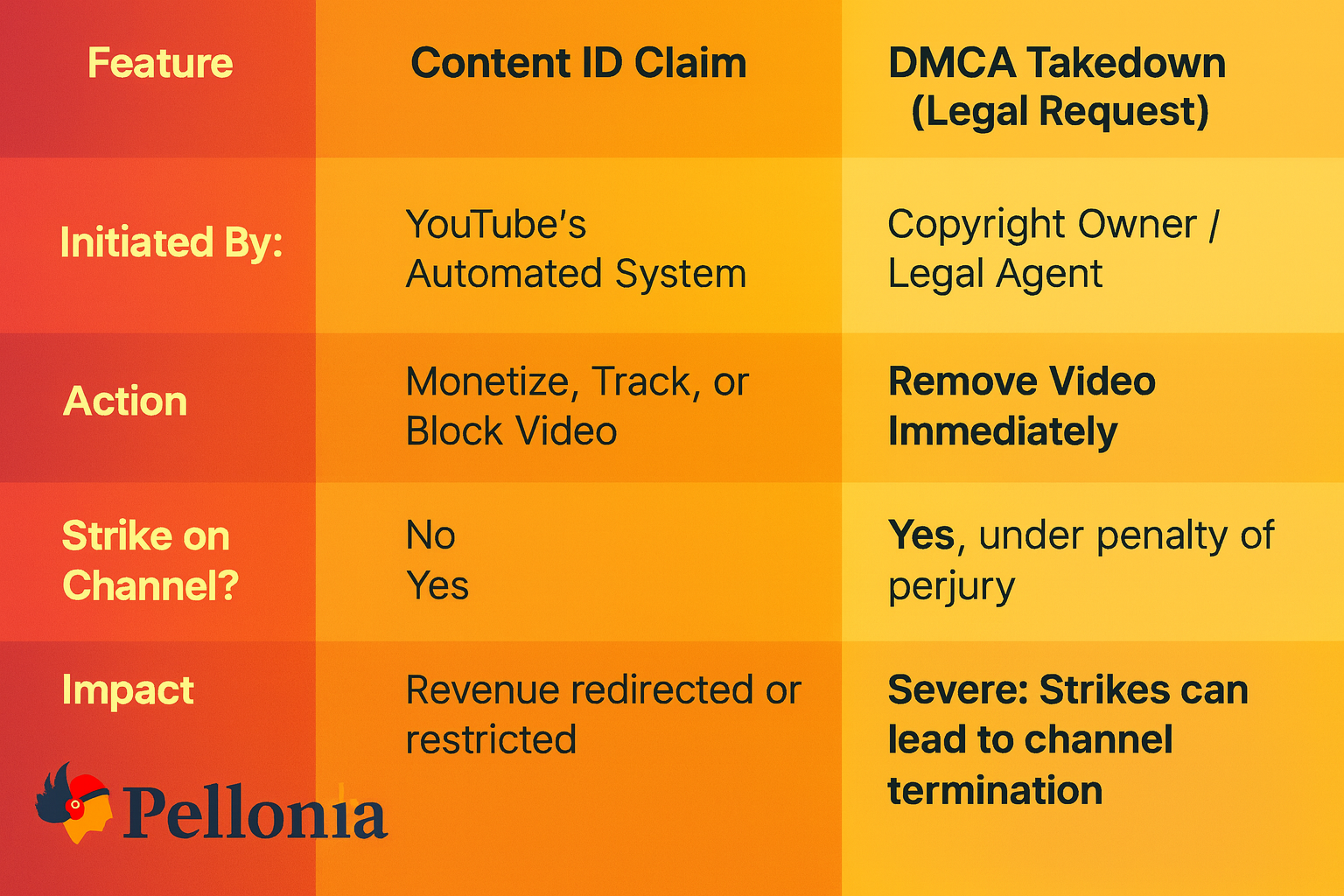
A DMCA takedown is the most serious action, resulting in an immediate copyright strike against the uploader’s channel.
The 2026 DMCA Takedown Process: A Step-by-Step Breakdown
Here’s how the process unfolds in the current landscape:
- Detection: The rights holder finds an infringing video (manually or via monitoring services).
- Submission: A complete DMCA takedown notice is filed with YouTube, including proof of ownership, URLs, and a sworn statement.
- Takedown: YouTube reviews and, if valid, removes the video immediately.
- Strike Issued: The uploader receives a strike on their channel.
- Uploader’s Choice: They can accept the strike (which lasts 90 days) or file a counter-notice.
- Counter-Notice: If filed, the rights holder has 10-14 days to initiate a lawsuit, or the video may be restored.
This procedural complexity is exactly why Pellonia exists, to manage this process with legal precision.
See a real result of our work:
A recent successful takedown for a Pellonia client, removing an infringing video within hours of filing, in total compliance with 2026 Rules.
.png)
The Severe Consequences of a DMCA Strike in 2026
Even one strike cripples your channel:
- Loss of monetization and livestreaming privileges.
- Harm to channel reputation and algorithmic standing.
- Three strikes result in permanent channel deletion.
- Increased scrutiny on all your future uploads.
Beware of Myths: “Giving credit” does not grant permission. “No copyright intended” is not a legal shield. Fair Use is a defense in court, not a magic wand that prevents strikes.
Pro Tips: How to Avoid Copyright Strikes on YouTube
- Sound: Use YouTube’s Audio Library or vetted royalty-free services.
- Visuals: Create your own or use licensed stock footage/image sites.
- Permission: Always get written, explicit permission for any third-party material.
- Education: Understand what truly constitutes Fair Use (commentary, criticism, parody, education).
- Dispute Wisely: Only dispute claims if you have solid, defensible grounds.
When to Take Action: Protecting Your Work with Pellonia
Let’s be clear: DMCA enforcement is a time-consuming, legally nuanced battlefield. Why navigate it alone?
At Pellonia, we specialize in turning this complexity into a seamless service for you. We handle the entire process:
- Proactive Monitoring: We track stolen content across YouTube and social media.
- Legally Bulletproof Filing: Our experts prepare and submit flawless DMCA takedown notices.
- Counter-Notice Defense: We fight fraudulent counter-claims to protect your ownership.
- Full Case Management: You get peace of mind, not paperwork.
We don’t just send reports; we shield your digital ownership as if it’s sacred. If your content is being stolen and monetized by others, it’s not just an annoyance, it’s a theft of your revenue and reputation.
Frequently Asked Questions (FAQs)
Q: How long does a YouTube DMCA strike last in 2026?
A: The first strike remains on your channel for 90 days. A second strike resets the clock for another 90 days. A third strike results in permanent channel termination.
Q: Can I get in trouble for filing a false DMCA claim?
A: Absolutely. The DMCA requires a “good faith” belief and a statement under penalty of perjury. Knowingly filing a false claim can expose you to legal liability.
Q: What’s the difference between a copyright claim and a strike?
A: A claim (usually via Content ID) typically means the rights holder is claiming revenue or blocking the video in some territories. It does not penalize your channel. A strike is a formal penalty resulting from a DMCA takedown or other serious violation, threatening your channel’s status.
Q: I’m a small creator. Can Pellonia help me, or is it only for big companies?
A: Pellonia is for all rights holders. Whether you’re an independent musician, a filmmaker, or a growing brand, our service is designed to make professional-grade copyright protection accessible and effective for you.
Q: How quickly can you remove an infringing video?
A: While YouTube’s review time varies, once a valid DMCA notice is submitted, they often act within hours. Our focus at Pellonia is on preparing and submitting a flawless notice as rapidly as possible to start that clock.
Ready to take back control? Contact us today and focus on your creativity; let Pellonia handle the protection.


